I don’t think I’ll ever get over the mangoes I had in Peru. They were, hands down, the best mangoes I’ve ever tasted—so incredibly sweet, juicy, and bursting with flavor. I’ll be dreaming about them for a long time!
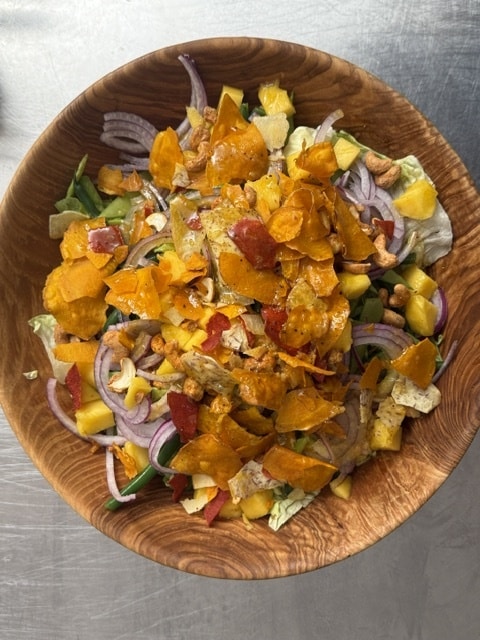
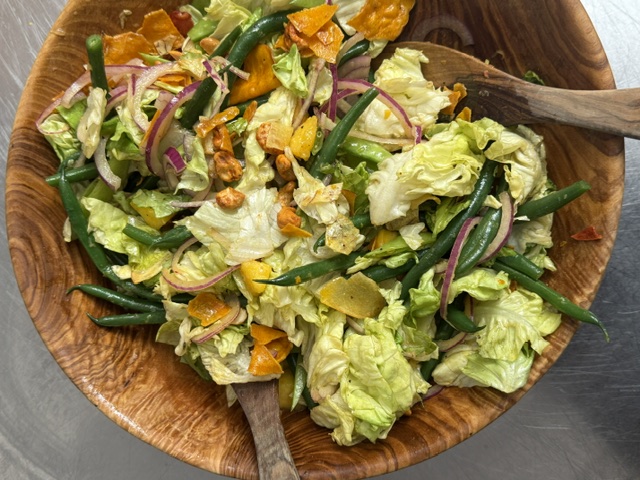
While helping out in the kitchen at Chabad of Cusco in Peru, I wanted to create a salad that really let the mango shine. I worked with what they had on hand in the kitchen, including green beans and snow peas, and brought it all together with a curry honey lime dressing. The combination of sweet, savory, tangy, and crunchy was absolute perfection, and everyone went crazy for it!
We all loved it so much that I made it again for 200 people on Simchat Torah, alongside a few of my staple salads, including my roasted cabbage salad and Busy in Brooklyn house salad from Millennial Kosher (the Peruvians loved the addition of quinoa in it!). They were all a huge hit, but this mango salad was something special. A little taste of Peru that I’ll be dreaming about for a long time!
Mango Curry Crunch Salad
5oz butter lettuce
1 large ripe mango, diced (preferably Ataulfo mango)
1 heaping cup green beans, trimmed
1 cup snow peas, thinly sliced diagonally
½ small red onion, thinly sliced
½ cup roasted salted cashews, roughly chopped (I like the chili ones from Trader Joes)
1 generous cup sweet potato or root vegetable chips, lightly crushed
Curry Honey Lime Dressing
1/4 cup olive oil
3 tbsp freshly squeezed lime juice
2 tablespoon honey
1 heaping teaspoon curry powder
1 garlic clove, finely grated
kosher salt and pepper, to taste
Method
Bring a pot of salted water to a boil. Add the green beans and blanch for 2–3 minutes, until bright green and crisp-tender. Transfer immediately to an ice bath to stop the cooking, then drain and dry thoroughly.
In a small bowl or jar, whisk together the olive oil, lime juice, honey, curry powder, garlic, salt and pepper until well combined.
Arrange the butter lettuce in a large serving bowl and top with the mango, green beans, snow peas, and red onion.
Just before serving, toss with the curry honey lime dressing and finish with the roasted cashews and crushed sweet potato chips.
Serve immediately while the chips are crisp and crunchy.
Related Recipes:
Curry Chicken Salad
Chili Lime Tuna Crudo with Mango Juice –
Bubby’s Green Bean Salad